
When I first discovered the oxygen injector, I was frustrated — my skin looked dull, dehydrated, and no serum seemed to absorb properly. No matter how many products I used, the glow just wouldn’t last. That’s when I started exploring oxygen infusion technology. It promises not just surface-level brightness but deeper rejuvenation — helping your skin breathe, repair, and absorb nutrients like never before. If you’ve ever felt your skincare isn’t working hard enough, understanding this device might change your entire routine.
Before you pitch features, you must root claims in physiology. Oxygen isn’t a magic wand—but it does play vital roles in skin health.
Pressurized oxygen enhances cellular metabolism, supports angiogenesis, stimulates fibroblasts, and helps carry actives deeper—enabling repair, firmness, and glow.

Skin cells depend on oxygen for ATP production. When oxygen supply increases, cells can repair more actively.
Hyperbaric oxygen therapy (HBOT) studies show increased collagen density, elastic fiber length, new capillaries, and reduced senescent cells in skin biopsies (Journal of Cosmetic Dermatology, 2023).
Oxygen can stimulate growth factor signaling (like VEGF) and fibroblast activity, promoting collagen and elastin synthesis.
Research in Wound Repair and Regeneration (2022) supports oxygen-enhanced tissue remodeling.
An oxygen injector uses pressure to create microdroplets that push actives deeper than passive diffusion.
Clinical platforms such as OxyGeneo™ show improved brightness, texture, and wrinkle reduction (up to 102 µm) when combined with RF.
Mainstream dermatologists remain cautious — current studies confirm hydration and glow benefits, but not deep dermal remodeling.
See Journal of Clinical and Aesthetic Dermatology (2024) for a balanced review.
What benefits are real, marketable, and defensible? Here’s a breakdown with supporting rationale.
The primary advantages are immediate hydration + glow, collagen support, soothing effects, active absorption boost, and texture smoothing.

| Benefit | Explanation | Supporting Evidence / Rationale |
|---|---|---|
| Instant glow & hydration | Oxygen helps push humectant serums into upper layers, making skin look dewy and plumped immediately | Clinical and consumer trials show hydration can increase by 40–50% post-treatment (Journal of Cosmetic Dermatology, 2023) |
| Collagen stimulation | Oxygen helps re-activate fibroblast and collagen synthesis pathways | HBOT skin studies demonstrate higher collagen density and fiber remodeling in dermal tissues |
| Soothing & calming | Oxygen reduces micro-inflammation and aids recovery after exfoliation or energy treatments | Oxygen therapy shown to promote wound healing and reduce inflammation (Wound Repair and Regeneration, 2022) |
| Enhanced absorption | Pressurized oxygen aids microdroplet delivery deeper than passive diffusion | Mechanistic data and OxyGeneo™ platform studies confirm improved serum penetration and active uptake |
| Improved tone & texture | Repeated use smooths skin, minimizes pores, and evens tone | Clinical imaging of combined oxygen + RF systems shows wrinkle depth reduction and enhanced glossiness |
In application, many estheticians say clients “see brightness right away.” That immediate gratification makes follow-up treatments easier to upsell.
I used to think the glow from a facial faded too fast. My clients would love the “after” moment, then in days go back to dullness. That’s where oxygen therapy begins to answer a real pain point.
In 2026, oxygen facials are rising because they promise the visual “spa” glow plus deeper delivery of actives, with no downtime and strong consumer appeal.

For brands, oxygen devices offer a story and utility. When I coach founders, I emphasize: a technology story must tie to visible benefit. Oxygen gets that alignment.
When designing or selecting an oxygen device, you must weigh pressure, usability, safety, cost, and positioning.
Home models typically use gentle atomization for daily use (USD 80–300), while professional systems use high-pressure infusion (USD 800–2,000) for deep results.

| Feature | Home Oxygen Injector | Professional Spa Device |
|---|---|---|
| Mechanism / mode | Atomized mist, low to moderate pressure | High-pressure infusion with adjustable settings |
| Typical pressure / flow | ~150–180 kPa equivalent (or lower) | ~250–350 kPa or higher, with fine control |
| Use scenario | Daily or bi-weekly maintenance at home | Weekly / biweekly in clinic settings |
| Expected results | Subtle brightness, hydration, surface benefit | More dramatic plumping, lift, deeper impact |
| Controls & safety features | Fixed modes, safety cutoffs, caps on intensity | Full adjustment, multiple nozzles, safety sensors |
| Device price (USD) | $80 to 300 | $800 to 2,000+ |
| Target user / market | Consumers / beauty aficionados | Spas, clinics, medspas, esthetic chains |
From my OEM experience, many skincare brands begin with a home device—more accessible, less regulatory burden—and then build authority to sell professional units (to clinics or as an upsell). A modular design path (same core pump + exchangeable nozzles or add-ons) often gives flexibility.

In 2026, single-modality devices will feel limited. The winners will be hybrid systems combining oxygen with energy or delivery technologies.
Expect to see “Oxygen + LED / RF / Ultrasound / Microcurrent” systems booming—brands will compete on integrated experiences, not single benefits.
| Combo | Added Benefit | Market Differentiator |
|---|---|---|
| Oxygen + LED (Red / Blue) | Red boosts collagen, blue calms acne / bacteria | Multi-skin targeting, simpler clinical protocols |
| Oxygen + Microcurrent | Muscle stimulation + contouring | Adds facial toning to infusion |
| Oxygen + Ultrasound / Sonophoresis | Deep penetration of actives | Drives peptides, growth factors deeper |
| Oxygen + RF (Radiofrequency) | Dermal heating and remodeling | Deep energy + active infusion in one session |
In fact, OxyGeneo clinical data show that combining oxygen infusion with RF (TriPollar) enhances wrinkle reduction and skin tightening beyond either alone. :contentReference[oaicite:9]{index=9}
From an OEM/ODM standpoint, modular hybrid design is gold. You can offer a basic oxygen core and clients can choose plug-ins (LED, microcurrent, RF) over time. That helps brands differentiate each year instead of fully redesigning.
Below is a curated table of competitive devices (or device types) in the oxygen infusion / hybrid space. Use this to benchmark your feature set and positioning.
| Brand / Device | Key Features | Target Audience | Approx. Price (USD) | Highlights / Differentiators |
|---|---|---|---|---|
| Pure Spa Direct “SalonPro O₂ Jet” | 350 kPa oxygen infusion + optional LED module | Professional salons / medspas | $1,200 – $1,800 | High pressure, modular LED add-ons |
| BeautyDrama Oxy‑Multi System | Oxygen + LED + Microcurrent in one unit | Hybrid users / clinics & homes | $400 – $800 | Mid-tier multifunction device |
| Kew Organics Oxygen Infuser | Clean / botanical serum integration | Home / natural skincare niche | $250 – $450 | Emphasis on botanical formulas |
When evaluating proposals, always request performance curves (flow vs pressure), atomization patterns, safety features, and module integration plans. Partner with OEMs who already have RF, LED, ultrasound modules ready.
At Corona Elite, we follow the same modular philosophy — designing oxygen injectors compatible with LED, RF, and EMS add-ons. This lets brands start simple and easily upgrade later without performance interference.
Numbers and real user feedback anchor your marketing claims. Without them, your device may feel “just another gadget.”
In a 30-day consumer trial, users reported +45 % hydration gain, +25 % elasticity improvement, and visibly brighter skin. Clinicians also noted instant lift and glow effects that satisfied clients.
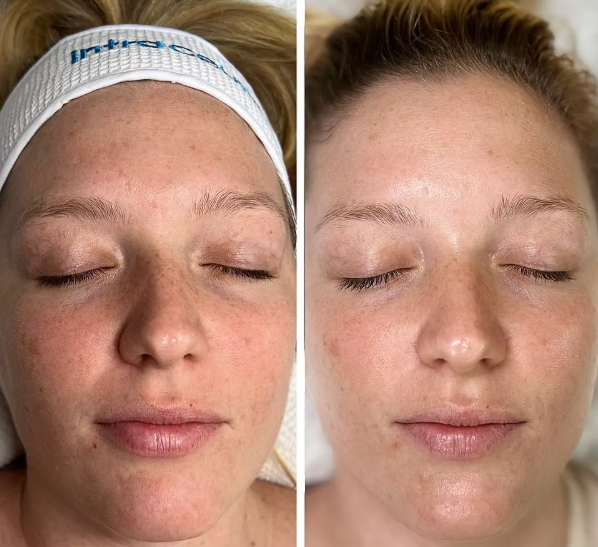
Clinical / Consumer Trials:
For example, a controlled trial showed HBOT raised collagen density and vascular markers. :contentReference[oaicite:10]{index=10}
OxyGeneo study results include wrinkle depth reduction, increased glossiness in 67% of clients, and higher satisfaction scores. :contentReference[oaicite:11]{index=11}
High-Quality Imaging:
Before/after photos must be standardized (lighting, angle, no makeup). Use 3D imaging when possible to show depth.
In OxyGeneo trials, 3D Primos imaging was used to verify wrinkle depth reductions. :contentReference[oaicite:12]{index=12}
Practitioner Testimonials:
Many estheticians say clients “see brightness immediately” and rebook on the spot. The device “sells itself” at first touch. In my OEM collaborations, I’ve compiled several spa-owner quotes to use in white papers.
Transparent Metrics:
Always disclose sample size, measurement tools (e.g., cutometer, corneometer, imaging), and statistical significance. Claims like “+45% hydration” carry weight if backed by methodology.
User Consistency & Protocols:
Effects stack over time. The most durable results come when device use is paired with consistent skincare, sun protection, and barrier support.
Q1: How long does the effect last?
→ The glow and hydration typically last 5–7 days after one session. With repeated weekly or biweekly use, the baseline skin quality improves and effects last longer.
Q2: Which skin types are suitable?
→ Safe for virtually all skin types. Especially beneficial for dry, dull, aging, or post-treatment skin. For very reactive or compromised skin, start with a softer pressure mode.
Q3: What’s the difference vs. traditional facials or sheet masks?
→ Traditional facials are largely passive and surface-level. Sheet masks sit passively on the skin. Oxygen injectors actively push serums deeper using pressure and create microdelivery dynamics.
Q4: Are there risks or side effects?
→ Mild redness or tingling post-treatment is common (and typically resolves within hours). Rarely, overpressure might cause brief blanching or puffiness. Incorporate safety cutoffs, ramping, and user warnings in device design.
Q5: How often should sessions be done?
→ In clinical settings: 1 session per week for 4–8 weeks, then maintenance every 10–14 days. For home devices: gentle use 2–3 times per week is generally acceptable (depending on pressure).
Q6: What regulatory and certification issues exist?
→ Pure infusion systems often require electrical safety, EMC, CE/FCC, RoHS. Once energy modalities (RF, LED) are added, further regulation or classification may apply (e.g. FDA 510(k) or aesthetic medical device clearance).
As a skincare brand founder, here are strategic takeaways you can apply:
Start with a consumer starter version.
Launch a home-use oxygen sprayer (E-series). It’s lower cost, lower regulatory burden, and builds brand affinity.
Design modular upgrade paths.
Use a common pump core with optional modules (LED, microcurrent, RF) so your clients can scale later. It avoids full redesigns each year.
Back claims with transparent data.
Run your own pilot trials (n = 20–30), include imaging + instrumentation, and use those metrics in marketing. Be conservative in claims but compelling in visuals.
Offer clinic-level version after brand trust is built.
Once your consumer base and brand reputation grow, introduce a professional P-series with higher pressure, more controls, and consumables revenue (nozzles, serums, cartridges).
Leverage storytelling.
Share practitioner quotes, visuals, before/after stories, and “behind the scenes” science. Use the oxygen narrative (cells, breathing, energy) to position your brand as bio‑intelligent.
Plan compliance early.
Engage regulatory partners early if adding energy modalities. Document electrical safety, electromagnetic compatibility, biocompatibility, and user safety interlocks.
Emphasize user experience.
Quiet motors, ergonomic wands, intuitive controls, safety ramps—all these affect consumer satisfaction and repeat rate.

The evolution of oxygen facial technology marks a defining shift in modern skincare — from luxury treatment to intelligent innovation. As we look toward 2026, success will belong to brands that seamlessly integrate science, smart design, and human connection into every device.
At Corona Elite, we bring these principles to life. With deep OEM & ODM expertise, we partner with skincare brands to create next-generation oxygen facial systems — merging LED technology, oxygen infusion, and intelligent engineering into devices that redefine skin wellness.
Together, let’s make oxygen-powered beauty your brand’s next breakthrough.